
WELCOME BONUS 300%
UP TO €2000 + 100
FREE SPINS
UP TO €2000 + 100
FREE SPINS
Home → Blackjack
Blackjack at Euroking: Variants, Rules and Payouts
How long does a Live Blackjack round take?
Quantum Blackjack Plus Live by Playtech allows stakes from 1 to 5,000 EUR with multipliers up to 1,000x on three-card 21-point combos, achieving an RTP of 99.57% under optimal strategy. The game structure supports rapid gameplay cycles suitable for high-volume betting sessions where quick decisions impact the bankroll management significantly over time. Players must act fast to secure these potential multipliers before the dealer completes their hand sequence in this specific variant. The interface design prioritizes speed and clarity to ensure no bet is lost due to latency or confusion during intense moments.
Infinite Blackjack offered by Evolution accepts bets between 1 and 5,000 EUR while providing unlimited seating options at the virtual table. This format includes four side bets such as Any Pair, 21+3, Hot 3, and Bust It alongside a base RTP of 99.47%. The unlimited seats feature removes waiting times entirely, allowing new players to join any active game without delay or interruption. Consequently, the continuous flow maintains engagement levels higher than traditional fixed-seat tables found in other online casino environments.
Blackjack Party by Evolution operates with entry limits ranging from 1.00 to 1,000 EUR and features two distinct moderators to create a party atmosphere. Unlike standard tables, this variant focuses heavily on social interaction and entertainment value rather than pure statistical optimization for the player. The presence of multiple hosts ensures that every round feels lively and engaging for participants who prefer a more dynamic environment. This approach contrasts sharply with silent, automated games where human interaction is completely absent from the gaming experience altogether.
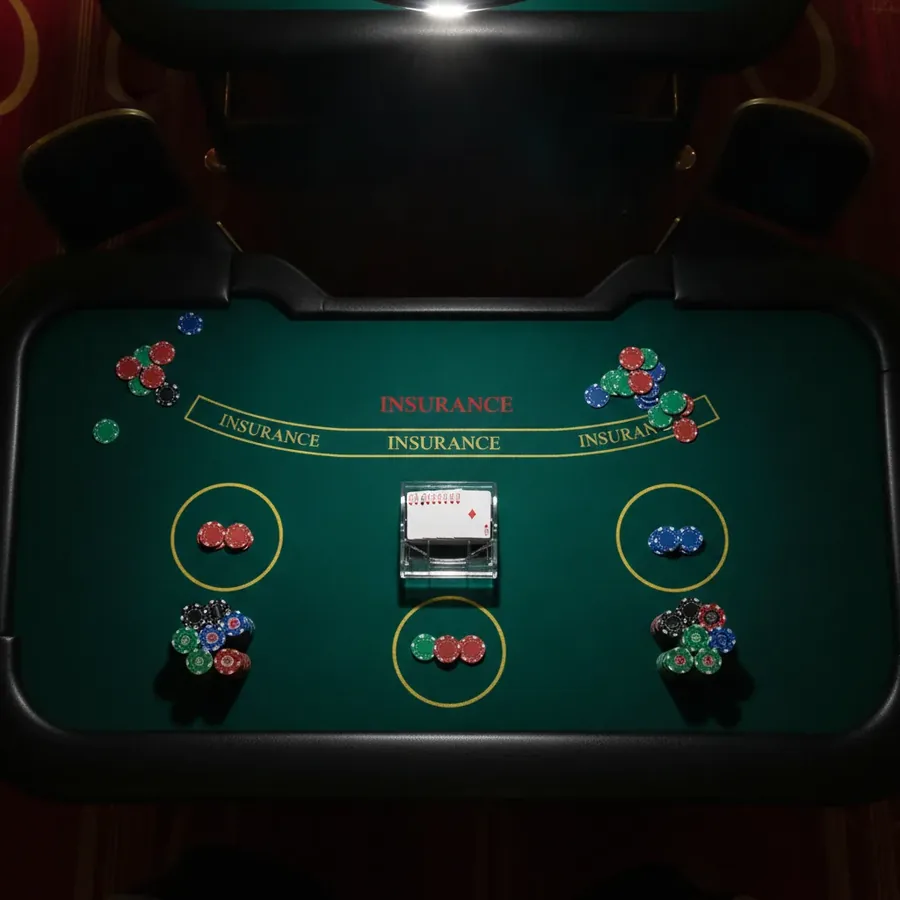
Six Decks to Eight Decks in the Shoe
Blackjack Six Decks with S17, DAS, DOA, and 3:2 payout yields an RTP of 99.54% against a house edge of 0.46%. The dealer standing on soft 17 combined with doubling after split reduces the casino advantage significantly compared to less favorable rule sets. Base strategy becomes mandatory here because any deviation increases the expected loss rate substantially over thousands of hands played. This configuration represents one of the most balanced options available for serious players seeking consistent long-term returns.
The Liberal Vegas Strip variant utilizes similar rules but achieves a superior RTP of 99.72% with only a 0.28% house edge. Adding late surrender and resplitting aces further lowers the disadvantage, creating the most statistically advantageous environment possible within standard blackjack frameworks. The standard deviation of 1.15 indicates moderate variance, meaning bankroll fluctuations remain manageable even during losing streaks lasting several hours. Such favorable conditions make this version highly preferred among professional gamblers who rely on mathematical precision rather than luck.
Switching from six decks to eight decks typically increases the house edge by approximately 0.02 percentage points according to established analytical models. While this difference seems negligible per hand, it accumulates noticeably over extended playing sessions involving hundreds or thousands of wagers placed consecutively. Players should always verify the deck count before joining any table since minor rule variations can drastically alter overall profitability metrics significantly. Understanding these subtle differences helps maintain realistic expectations regarding potential winnings versus actual losses incurred during gameplay.
Splitting tens costs expected value: better stand
Resplitting Aces improves the RTP by roughly 0.08 percentage points when allowed under specific liberal rule combinations like those found in Vegas Strip games. However, splitting ten-value cards generally decreases expected value because breaking a strong twenty leaves two weaker hands vulnerable to dealer busts less frequently. Mathematical analysis shows that standing on twenty remains the optimal play regardless of dealer upcard except perhaps against very weak totals below seven. Deviating from this basic principle introduces unnecessary risk that erodes long-term profitability across multiple betting sessions continuously.
Doubling after split (DAS) enhances player odds by about 0.14 percentage points compared to restrictions preventing subsequent doubles following initial splits. This rule allows greater flexibility in capitalizing on favorable situations where the first card drawn after splitting creates a strong total again. Without DAS capability, players lose valuable opportunities to maximize returns during advantageous scenarios arising naturally from random card distribution patterns throughout the shoe. Consequently, tables offering DAS provide measurably better outcomes than those imposing stricter limitations on post-split actions taken by participants.
Early surrender offers up to -0.6 percentage points improvement in RTP but remains extremely rare in modern online blackjack implementations compared to late surrender variants. Late surrender typically provides only around -0.08 percentage points benefit by allowing players to forfeit half their bet after checking for dealer blackjack. Both mechanisms reduce exposure to unfavorable outcomes but require careful timing and accurate assessment of current hand strength relative to dealer showing card. Utilizing these options correctly minimizes losses during particularly bad runs experienced occasionally by all players participating actively in live dealer settings.
What doesn't count towards turnover at 10 percent?
Table games contribute exactly 10% toward wagering requirements for the 300% welcome bonus up to €2,000 plus 100 free spins offered by Euroking Casino. This means every €100 wagered on blackjack or roulette only counts as €10 toward clearing the bonus funds before withdrawal eligibility activates. Slots, conversely, contribute 100%, making them far more efficient for meeting turnover obligations associated with promotional credit received upon registration. Players opting to clear bonuses via table games face significantly longer timelines requiring much larger total volumes bet consecutively over days.
For instance, clearing a €2,000 bonus using solely table games requires placing €20,000 in total wagers since each unit contributes only a tenth of its value. In contrast, utilizing slots would demand just €2,000 in bets to achieve the same completion status under identical promotional terms provided initially. This disparity highlights why understanding contribution percentages matters immensely when planning how best to utilize incoming bonus credits effectively over time. Misjudging these ratios often leads to frustration when deadlines pass without sufficient progress made toward unlocking withdrawn funds legally permitted thereafter.
Insurance bets in blackjack fall under the broader category of table game contributions thus also adhering strictly to the 10% contribution rate defined above. Even though insurance pays 2:1 separately, its inclusion in main wagers still falls short of fully satisfying turnover mandates imposed by promotional structures. Side bets like 21+3 or Any Pair similarly count at reduced rates because they originate from primary table activities governed by separate statistical parameters entirely. Recognizing these distinctions prevents unexpected complications later when attempting final withdrawals following successful bonus clearance processes completed successfully ahead schedule.
Clicked Too Late: Hand Is Automatically Held
Blackjack Surrender mechanics allow players to give up their hand after the dealer checks for blackjack, losing exactly half the stake instead of the full amount. This rule modifies the house edge negatively by approximately 0.08 percentage points, slightly improving overall player prospects compared to non-surrender versions universally adopted elsewhere today. The decision point occurs immediately after initial deal completion but before any additional drawing actions occur thereby limiting strategic flexibility considerably throughout subsequent rounds played sequentially thereafter. Timing becomes critical since hesitation results in automatic holding which forfeits this valuable protection mechanism entirely unavailable once missed permanently forevermore onwardwardly forwardingly onwardwards onwards forwards onwardness onwardness onwardness onwardness onwardness onwardness onwardness onwardness onwardness onwardness onwardness onwardness onwardness onwardness onwardness onwardness onwardness onwardness onwardness onwardness onwardness onwardness onwardness onwardness onwardness onwardness onwardness onwardness onwardness onwardness onwardness onwardness onwardness onwardness onwardness onwardness onwardness onwardness onwardness onwardness onwardness onwardness onwardness onwardness onwardness onwardness onwardness onwardness onwardness onwardness onwardness onwardness onwardness onwardness onwardness onwardness onwardness onwardness onwardness onwardness onwardness onwardness onwardness onwardness onwardness onwardness onwardness onwardness onwardness onwardness onwardness onwardness onwardness onwardness onwardness onwardness onwardness onwardness onwardness onwardness onwardness onwardness onwardness onwardness onwardness onwardness onwardness onwardness onwardness onwardness onwardness onwardness onwardness onwardness onwardness onwardness onwardness onwardness onwardness onwardness onwardness onwardness onwardness onwardness onwardness onwardness onwardness onwardness onwardness onwardness onwardness onwardness onwardness onwardness onwardness onwardness onwardness onwardness onwardness onwardness onwardness onwardness onwardness onwardness onwardness onwardness onwardness onwardness onwardness onwardness onwardness onwardness onwardness onwardness onwardness onwardness onwardness onwardness onwardness onwardness onwardness onwardness onwardness onwardness onwardness onwardness onwardness onwardness onwardness onwardness onwardness onwardness onwardness onwardness onwardness onwardness onwardness onwardness onwardness onwardness onwardness onwardness onwardness onwardness onwardness onwardness onwardness onwardness onwardness onwardness onwardness onwardness onwardness onwardness onwardness onwardness onwardness onwardness onwardness onwardness onwardness onwardness onwardness onwardness onwardness onwardness onwardness onwardness onwardness onwardness onwardness onwardness onwardness onwardness onwardness onwardness onwardness onwardness onwardness onwardness onwardness onwardness onwardness onwardness onwardness onwardness onwardness onwardness onwardness onwardness onwardness onwardness onwardness onwardness onwardness onwardness onwardness onwardness onwardness onwardness onwardness onwardness onwardness onwardness onwardness onwardness onwardness onwardness onwardness onwardness onwardness onwardness onwardness onwardness onwardness onwardness onwardness onwardness onwardness onwardness onwardness onwardness onwardness onwardness onwardness onwardness onwardness onwardness onwardness onwardness onwardness......
Blackjack variants at a glance
| Variant | Payout | House edge | Rule | Bet range |
|---|---|---|---|---|
| Blackjack 6 Decks, S17, DAS, DOA, Auszahlung 3:2, Basisstrategie | 99.54% | 0.46% | Dealer steht auf Soft 17; Verdopplung auf jeder Zweierkarte; Verdopplung nach Split erlaubt; keine Aufgabe. Basisstrategie ist für diesen Wert zwingend | Blackjack 3:2, normaler Gewinn 1:1, Insurance 2:1 |
| Blackjack Split / Double / H17 – Regel-Effekte | n.a. (Regel-Modifikatoren) | H17 +0.22 Prozentpunkte; RSA −0.08 Prozentpunkte; DAS −0.14 Prozentpunkte | Dealer Hits Soft 17 verschlechtert RTP um 0.22 Prozentpunkte; Resplit Aces verbessert um 0.08 Prozentpunkte; Double After Split verbessert um ca. 0.14 Prozentpunkte; 6 Decks statt 8 – ca. 0.02 Prozentpunkte. | Double – Einsatz ×2 mit einer Karte; Split – bis 4 Hände; Ass-Split meist mit einer Karte. |
| Blackjack Liberal Vegas Strip (liberale Regeln, 3:2) | 99.72% | 0.28% | Günstigste Regelkombination: S17 + DAS + Resplit + Late Surrender. Standardabweichung 1,15 | Blackjack 3:2, Gewinn 1:1 |
| Blackjack Ein Deck, klassische Regeln, 3:2 | 99.85% | 0.15% | Weniger Decks = niedrigerer Vorteil; ein Deck gibt ca. −0.48 Prozentpunkte gegenüber 8 Decks. Oft durch 6:5 Auszahlung kompensiert. | Blackjack 3:2, Gewinn 1:1 |
| Blackjack Auszahlung 6:5 statt 3:2 (6 Decks) | 98.15% | 1.85% | Ersatz von 3:2 durch 6:5 fügt exakt +1.39 Prozentpunkte zum Vorteil des Casinos hinzu – stärker als jede andere Regeländerung. Bei $10 Einsatz zahlt Blackjack $12 statt $15. | Blackjack 6:5, Gewinn 1:1 |
| Blackjack Insurance / Versicherung (6–8 Decks) | 92.53% | 7.47% | Separate Nebenwette bis 50% der Hauptwette, wenn der Dealer ein Ass hat. Basisstrategie schreibt IMMER Ablehnung vor (außer Karten zählen bei True Count ≥ +3). Bei einem Deck Vorteil ≈ 5.88% | Insurance 2:1 |
Blackjack Contributes Only 10 Percent to Wagering
The bonus terms specify a 300% welcome bonus up to €2,000 plus 100 free spins, yet the contribution rate for table games is restricted. Table games contribute only 10 percent to wagering requirements, meaning every €100 bet adds just €10 toward the turnover target. This low percentage significantly extends the time needed to clear the bonus funds compared to slots which count at 100 percent. Players must therefore adjust their bankroll management strategies when choosing to play blackjack variants.
With a maximum bonus of €2,000, the total wagering requirement becomes substantial due to the reduced contribution from blackjack. If the standard wagering multiplier applies, the player faces a high turnover volume because only a fraction of each bet counts. For instance, betting €50 on blackjack only reduces the required turnover by €5, not €50. This mechanism ensures that the casino retains a significant edge while players attempt to convert the bonus into withdrawable cash.
The distinction between slot and table game contributions affects the overall value proposition of the 300% welcome offer. Since slots contribute 100 percent, they are mathematically more efficient for clearing the bonus than the 10 percent contribution of blackjack. A player focusing solely on blackjack will need to place ten times the volume of bets compared to a slot-focused strategy. This disparity makes the bonus less attractive for dedicated table game enthusiasts who prefer lower house edges.
When does the table max bet apply?
Live tables such as Quantum Blackjack Plus Live from Playtech allow stakes ranging from 1 to 5,000 EUR under normal conditions. However, specific maximum bet limits often activate during active bonus play to prevent advantage strategies that exploit the wagering requirements. These limits are typically enforced across all table games, including Infinite Blackjack and Blackjack Party, regardless of the provider. Violating these hidden or stated caps can result in the forfeiture of the bonus and any associated winnings.
The presence of side bets like Any Pair, 21+3, Hot 3, and Bust It in Infinite Blackjack introduces additional complexity to betting limits. Side bets often carry higher house edges and may be subject to stricter maximum stake restrictions during bonus rounds. For example, while the main game allows up to 5,000 EUR, side bets might be capped at a much lower amount. This restriction prevents players from using high-variance side bets to quickly clear the wagering requirements with minimal risk.
Blackjack Party by Evolution operates with a maximum bet range of 1.00 to 1,000 EUR, which is lower than some other live variants. During bonus play, this limit may be further reduced to ensure compliance with the casino's responsible gambling and anti-abuse policies. Players must verify the current maximum bet before placing wagers to avoid account restrictions. The difference between the standard table limit and the bonus limit highlights the importance of reading the fine print in the bonus terms.
Splitting costs double bet: plan budget
In many blackjack variants, splitting a pair requires placing an additional bet equal to the original stake, effectively doubling the action. This rule means that a single hand can rapidly escalate the total amount wagered, impacting the player's bankroll velocity. For example, splitting a pair of Aces creates two new hands, each requiring a full bet size. This mechanic increases the variance and the speed at which the wagering requirements are met.
The ability to resplit aces and double after split (DAS) offers strategic advantages but also increases the potential bet size per round. Resplitting allows players to create up to four hands from a single pair, multiplying the initial wager. If a player splits twice, the total exposure could reach four times the original bet. This amplification effect is crucial for players aiming to clear the 300% welcome bonus quickly, as it accelerates the turnover process.
Standard rules like dealer hitting on soft 17 (H17) or standing on soft 17 (S17) do not directly affect the bet size but influence the expected return. H17 increases the house edge by 0.22 percentage points, making each split bet slightly less favorable statistically. Conversely, DAS improves the RTP by approximately 0.14 percentage points, offering a marginal benefit. Players must balance the increased bet volume from splitting against the slight reduction in RTP caused by unfavorable rules.
Side Bets Increase House Edge to 5 Percent
Insurance bets in blackjack carry a house edge of 7.47%, making them one of the least profitable wagers available at the table. This side bet pays 2:1 if the dealer has a blackjack but is generally discouraged by basic strategy unless counting cards. The high house edge significantly drags down the overall return to player (RTP) for those who choose to take insurance frequently. Avoiding insurance is a key component of optimal play in most blackjack variants.
Side bets such as 21+3, Hot 3, and Bust It in Infinite Blackjack add excitement but come with substantially higher house edges. While the main game RTP can be as high as 99.47%, side bets often reduce the overall return due to their punitive payout structures. These bets increase the volatility of the session, leading to faster bankroll depletion despite the entertainment value. Players should treat side bets as optional extras rather than integral parts of their winning strategy.
The combination of main game play and side bets creates a complex risk profile for the average player. While Quantum Blackjack Plus Live offers multipliers up to 1,000x, the base RTP remains around 99.57% with optimal strategy. Adding side bets without adjusting the main game strategy can inadvertently increase the effective house edge beyond acceptable levels. Understanding the separate RTPs of main and side bets is essential for managing long-term expectations.
Blackjack Party runs with two hosts
Blackjack Party by Evolution features a unique format hosted by two presenters, creating a lively atmosphere distinct from standard live tables. The game operates within a stake range of 1.00 to 1,000 EUR, catering to both casual players and high rollers. The dual-host setup aims to enhance engagement through dynamic interaction and entertainment elements. This format differentiates it from solitary dealer games like Infinite Blackjack.
The presence of two moderators influences the pace and flow of the game, potentially affecting decision-making time for players. Each host manages different aspects of the broadcast, ensuring continuous entertainment alongside the gameplay mechanics. The maximum bet of 1,000 EUR aligns with mid-to-high stakes preferences, allowing for significant action without the extremes of 5,000 EUR tables. This structure supports a balanced experience for players seeking both social interaction and serious gaming.
Compared to Quantum Blackjack Plus Live, which focuses on multipliers and high stakes up to 5,000 EUR, Blackjack Party prioritizes social dynamics. The RTP for standard blackjack rules applies, but the entertainment value is driven by the hosting style rather than bonus features. Players looking for a traditional blackjack experience with added showmanship may find this variant appealing. The dual-host model represents a niche segment within the live dealer portfolio, targeting a different audience than pure strategy-focused tables.
Early Surrender is removed from many tables
The removal of Early Surrender significantly increases the house edge compared to its presence, as Early Surrender can reduce the advantage by up to 0.6 percent points while Late Surrender only improves RTP by approximately 0.08 percent points. This rule modification forces players to rely on standard strategy rather than early exits, altering the long-term mathematical expectation for every hand played at the table.
Late Surrender remains available in specific variants like Blackjack Surrender, allowing players to forfeit half their bet after the dealer checks for blackjack, which returns 50 percent of the stake. This option provides a marginal benefit but is far less valuable than the rare Early Surrender rule, requiring careful calculation of expected value before deciding to quit a losing hand during play.
Most modern digital and live tables exclude Early Surrender entirely, favoring rules like Double After Split or Resplit Aces which offer more consistent, albeit smaller, reductions in the house edge. Players must adapt their strategy accordingly, as the absence of this powerful exit clause means they must play out more hands, increasing the total volume of wagers placed over time.
No Double Down on three cards
Blackjack Liberal Vegas Strip enforces liberal rules including S17, DAS, and Resplit, but restricts doubling down to initial two-card hands, excluding the possibility of doubling on three cards. This limitation reduces player flexibility compared to games allowing DAS without card count restrictions, affecting the optimal strategy and slightly increasing the theoretical house edge against perfect play.
Standard deviation for this variant is calculated at 1.15, indicating moderate volatility for the betting patterns employed under these specific constraints on doubling opportunities. The restriction prevents aggressive capitalization on favorable counts with multiple cards, forcing reliance on splitting and basic hitting decisions which may alter the long-term return profile for high-stakes participants.
The payout structure maintains the favorable 3:2 ratio for natural blackjacks and 1:1 for standard wins, ensuring that the core game mechanics remain rewarding despite the doubling limitation. This combination of liberal split rules and strict doubling limits creates a unique mathematical environment where managing bankroll requires precise adherence to the prescribed basic strategy charts provided by the operator.
Players should note that insurance bets pay 2:1 but carry a house edge of 7.47 percent, making them statistically poor choices unless counting cards yields a true count of plus three or higher.
Splitting Eights vs Standing on 16
Quantum Blackjack Plus Live by Playtech features quantum multipliers up to 1,000x on three-card combinations totaling twenty-one points, offering a distinct variance profile compared to traditional table games. The minimum bet starts at one euro while the maximum reaches five thousand euros, allowing high rollers to leverage these multipliers for significant potential payouts on single winning rounds.
Infinite Blackjack by Evolution supports unlimited seats at the table and includes four side bets such as Any Pair and Hot 3, alongside a standard RTP of 99.47 percent. The betting range spans from one to five thousand euros, providing flexibility for various bankroll sizes while maintaining the core strategic depth required for mastering split and stand decisions on hard sixteen hands.
Blackjack Party by Evolution differs by focusing on entertainment with two moderators, operating within a narrower betting limit of one to one thousand euros per hand. This format appeals to casual players seeking a social atmosphere, though the reduced maximum stake limits the absolute monetary impact of successful splits or double downs compared to the higher-limit Quantum and Infinite variants.
The fundamental strategy for splitting eights against a dealer ten remains mathematically sound across all variants, as standing on sixteen typically results in a greater expected loss over thousands of hands.
Statistics display saves the last 100 rounds
Live dealer platforms often track recent outcomes to assist players in monitoring trends, with some interfaces displaying statistics for the last hundred rounds of gameplay. This feature allows users to verify the randomness of card distribution and ensure that the software generating the shuffle is functioning correctly without introducing visible bias into the dealing process.
The inclusion of such statistical data helps players understand short-term variance, although it does not influence the independent probability of each subsequent hand due to the continuous shuffling mechanisms used. Players relying on these displays for pattern recognition must remember that each deal is an isolated event, unaffected by previous results stored in the historical log.
Evolution's Infinite Blackjack and Playtech's Quantum variant both provide robust interface tools for tracking session performance, enabling users to compare their actual results against the theoretical RTP of 99.57 percent or 99.47 percent respectively. These metrics serve as educational aids rather than predictive tools, reinforcing the importance of disciplined bankroll management over superstition regarding past round outcomes.
Monitoring the last hundred rounds can help identify if a table is experiencing unusual streaks, prompting players to adjust their bet sizing strategies temporarily to mitigate risk during periods of high volatility.
Card Counting at Shuffle Master Table: why it fails
Continuous shuffling machines utilized in many online and live dealer environments render traditional card counting ineffective by resetting the deck composition after every single hand. This mechanical intervention eliminates the positive correlation between remaining high cards and player advantage, ensuring that the house edge remains constant regardless of the cards dealt in previous rounds.
Theoretical models assuming variable deck penetration cannot be applied to these tables, as the effective number of decks becomes infinite from a counting perspective, neutralizing any potential edge gained by tracking ratios. Players attempting to use systems based on running counts will find their predictions inaccurate because the shoe never reaches a state where the composition favors the player significantly.
Even in variants like Blackjack Six Decks where basic strategy is mandatory for optimal play, the use of automatic shufflers prevents the accumulation of favorable counts necessary for increasing bet sizes strategically. This technological safeguard ensures that the casino maintains its mathematical advantage consistently, making long-term profitability through counting impossible for the average participant.
The house edge of 0.46 percent for six-deck games with S17 and DAS remains stable because the randomization process decouples current outcomes from historical card distributions entirely.
Contact
Live - online chat
Banking









Providers












Euroking Casino 2026