
WELCOME BONUS 300%
UP TO €2000 + 100
FREE SPINS
UP TO €2000 + 100
FREE SPINS
Home → Roulette
Roulette at Euroking
Table Limit 500 Euro Stops Every Doubling
The maximum stake of 500 EUR on European Roulette prevents the Martingale strategy from recovering losses after five consecutive red outcomes. Starting with a base bet of 15.625 EUR, doubling the wager five times results in a final required stake of exactly 500 EUR. Any further attempt to double the bet exceeds the table limit and breaks the progression system permanently. Players cannot recover previous deficits through this specific betting pattern at this venue.
Lightning Roulette hosted by Evolution offers a higher maximum bet limit of 5,000 EUR for standard wagers. This elevated cap allows players to place larger stakes on single numbers or dozens without hitting the ceiling immediately. The multipliers on lightning numbers do not alter the fundamental table limits for regular bets like straight-ups. Consequently, high rollers can sustain their bankroll longer against variance compared to the restricted 500 EUR European table.
Ezugi’s Ultimate Roulette also permits bets up to 5,000 EUR, matching the upper range of Evolution’s offering. This limit applies to all standard chip placements, including split streets and corner combinations across the layout. The ability to wager higher amounts facilitates different staking plans that require larger initial outlays. This flexibility distinguishes live dealer games from the lower-stakes virtual European variant available on the platform.
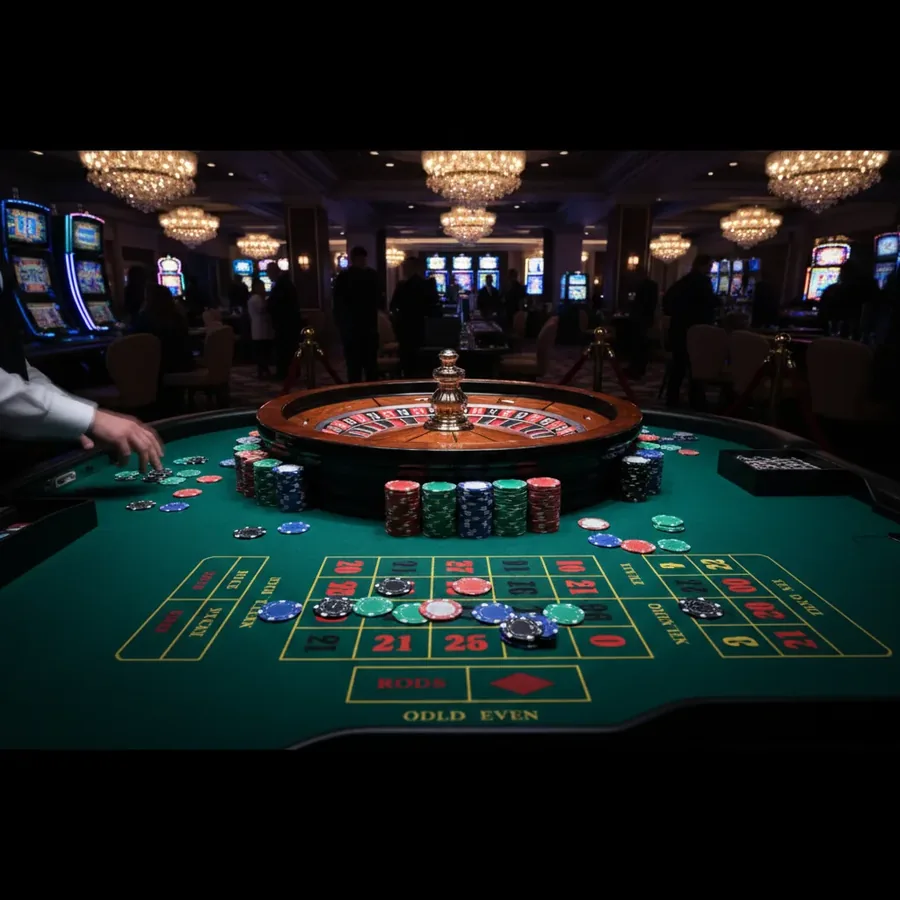
37 Pockets vs. 38 Pockets: The Difference
European Roulette features a wheel with 37 pockets, ranging from zero to thirty-six, establishing a house edge of 2.70%. This configuration excludes the double zero found on American wheels, thereby reducing the casino's mathematical advantage significantly. The single green zero pocket is the sole reason for the 2.70% edge on all even-money bets. This structure remains consistent across all standard European variants regardless of the software provider.
In contrast, American Roulette utilizes a wheel with 38 pockets, adding a double zero sector alongside the single zero. This additional pocket increases the house edge to 5.26%, effectively doubling the disadvantage for the player compared to the European version. The payout ratios remain identical at 35:1 for straight bets, but the probability of winning decreases due to the extra slot. This structural difference makes the American wheel statistically inferior for long-term play.
The French Roulette variant with La Partage returns half the stake on even-money bets when the ball lands on zero. This rule lowers the house edge to 1.35% for those specific bets, making it the most favorable option among standard roulette types. However, inner bets like straights and splits do not benefit from this refund and retain the standard 2.70% edge. Understanding these pocket configurations is essential for selecting the optimal game based on risk tolerance.
American Roulette includes a unique Five Number Bet covering zero, double zero, one, two, and three, which carries a house edge of 7.89%. This wager is exclusively available on the 38-pocket wheel and has no equivalent in European or French formats. The payout is 6:1, but the probability of hitting any of the five numbers is significantly lower than other options. Avoiding this specific bet is crucial for maintaining a reasonable expected return over time.
Too High a Bet for a 50 EUR Bankroll
A bankroll of 50 EUR is insufficient to withstand the variance of European Roulette, which has a house edge of 2.70%. Placing a standard minimum bet of 0.20 EUR per spin allows for approximately 250 spins before potential ruin if losses accumulate. However, a single losing streak of ten bets reduces the balance to roughly 34 EUR, leaving little room for recovery. This limited capital makes sustained play highly improbable without immediate deposits.
Live dealer games like Quantum Roulette by Playtech require a minimum bet of 0.10 EUR, extending the theoretical lifespan of a 50 EUR bankroll slightly. Even with this lower entry point, the 2.70% house edge ensures that the expected value declines steadily with each spin. A sequence of ten consecutive losses on minimum bets would deplete the bankroll by nearly 10 percent. Players must accept that small balances are quickly eroded by the inherent mathematical disadvantage.
The 300% welcome bonus up to 2,000 EUR provides additional funds, but table games contribute only 10% toward wagering requirements. This low contribution rate means that playing roulette generates very little progress toward unlocking the bonus cash. For instance, wagering 500 EUR on European Roulette counts as only 50 EUR toward the turnover target. This restriction forces players to use slots or other games to clear the bonus efficiently.
Using the full 2,000 EUR bonus on roulette would require wagering 80,000 EUR to meet a standard 40x requirement given the 10% contribution. This massive turnover target is unrealistic for most players within the allowed time frame. Consequently, allocating bonus funds to high-contribution games is necessary to avoid forfeiting the winnings. Roulette serves primarily as entertainment rather than a viable method for clearing substantial bonus amounts.
Latency and Betting Window in Live Stream
Live streaming introduces latency that affects the precise timing of bets placed on tables like Lightning Roulette by Evolution. The broadcasting delay typically ranges between one and three seconds, requiring players to account for this gap when placing time-sensitive wagers. Bets must be submitted well before the visual confirmation of the wheel stopping to ensure they are registered correctly. Missing this window results in rejected bets despite apparent readiness on the screen.
The betting window for each round in Quantum Roulette by Playtech closes automatically after the host announces the end of betting. This closure usually occurs within two seconds of the countdown reaching zero, leaving minimal margin for error. Players relying on slow internet connections may experience timeouts where bets fail to submit before the cutoff. Understanding this strict timeframe is critical to avoiding lost stakes during fast-paced live sessions.
Ezugi’s Ultimate Roulette follows similar protocols, with betting windows closing rapidly to maintain the flow of the game. The interface displays a clear countdown timer that synchronizes with the dealer’s actions on the physical table. Delays in data transmission can cause bets to arrive late, resulting in automatic rejection by the server. Consistent connectivity is essential to ensure that all intended wagers are processed before the draw begins.
The multipliers applied in Lightning Roulette are determined before the betting window closes, meaning players cannot adjust bets based on known multipliers. This randomness adds an element of unpredictability that complicates strategic planning for short-term outcomes. Players must commit to their stakes without knowing which numbers will receive enhanced payouts. This mechanic separates live dealer roulette from pre-determined RNG versions of the game.
Straight 35:1 vs Dozen 2:1 Hit Rate
A Straight bet on European Roulette pays 35:1 but covers only one of the 37 pockets on the wheel. This results in a hit rate of approximately 2.70%, meaning the player wins once every 37 spins on average. The high payout compensates for the low probability, but the frequent losses drain the bankroll quickly. This risk profile suits players seeking large occasional wins rather than steady, smaller returns.
Dozen bets pay 2:1 and cover twelve numbers, increasing the hit rate to roughly 32.43% per spin. This higher frequency of wins helps stabilize the bankroll over extended periods compared to single-number wagers. The lower payout means that significant profits require a much larger volume of successful bets. This strategy is often preferred by players aiming to extend their playing time and manage variance more effectively.
The Corner bet offers an intermediate option, paying 8:1 while covering four numbers for a hit rate of about 10.81%. This balance between risk and reward makes it a popular choice for structured betting systems. Players can place multiple corner bets to cover large portions of the wheel while maintaining manageable exposure. This approach provides more frequent feedback than straights without the volatility of dozen bets.
Column bets share the same payout and hit rate as dozens, offering 2:1 odds on twelve numbers arranged vertically. This symmetry allows for flexible coverage patterns, such as combining columns with dozens to cover twenty-four numbers. Such combinations increase the win frequency to nearly 65% but reduce the net profit per winning spin. Strategic layering of these bets requires careful calculation to ensure positive expected value over time.
Roulette bet types at a glance
| Bet | Payout | Win Chance | Numbers Covered | House Edge |
|---|---|---|---|---|
| Roulette Amerikanisch – Five Number Bet (0, 00, 1, 2, 3) | Five Number 6:1 (deckt 5 von 38 Sektoren) | 92.11% | Einzige Wette am amerikanischen Rad mit Edge über 5,26% – „Fallenwette“. Kein Äquivalent am europäischen Rad | 7.89% |
| Roulette Französisch, innere Einsätze (La Partage gilt nicht) | Straight 35:1, Split 17:1, Street 11:1, Corner 8:1, Six Line 5:1, Dozen 2:1, Column 2:1 | 97.30% | Rad gleich (37 Sektoren), aber La Partage/En Prison gilt nicht für innere Einsätze – Edge bleibt europäisch | 2.70% |
| Roulette Europäisch (einfache Null, 37 Sektoren) | Straight 35:1, Split 17:1, Street 11:1, Corner 8:1, Six Line 5:1, Dozen 2:1, Column 2:1, Rot/Schwarz 1:1, Odd/Even 1:1, 1-18/19-36 1:1 | 97.30% | 37 Sektoren (1–36 + 0); Auszahlungen wie für 36 Sektoren – daher konstanter Edge auf ALLE Wetten | 2.70% |
| Roulette Amerikanisch (doppelte Null, 38 Sektoren) | Straight 35:1, Split 17:1, Street 11:1, Corner 8:1, Six Line 5:1, Dozen 2:1, Column 2:1, Rot/Schwarz 1:1 | 94.74% | 38 Sektoren (1–36 + 0 + 00); Auszahlungen wie beim europäischen Rad, aber der zusätzliche Sektor verdoppelt den Hausvorteil | 5.26% |
| Roulette Französisch mit La Partage (gerade Chancen) | Rot/Schwarz 1:1 (bei 0 Rückerstattung 50%), Odd/Even 1:1, Low/High 1:1; Innere Einsätze ohne La Partage: Straight 35:1, Split 17:1, Street 11:1, Corner 8:1 | 98.65% | Bei 0 wird die Hälfte des Einsatzes auf gerade Chancen zurückerstattet (Rot/Schwarz, Pair/Impair, Manque/Passe). En Prison gibt denselben 1,35%. Regel gilt NUR für gleiche Einsätze | 1.35% |
Multipliers up to 500x Lower the Base Payout
Quantum Roulette by Playtech offers multipliers up to 500x on straight bets, significantly altering the payout structure compared to standard European wheels. While the base Straight payout remains at 35:1, these temporary boosts can increase returns for lucky hits during specific rounds. This mechanic introduces higher volatility into the game session.
The standard RTP for Quantum Roulette sits at 97.30%, matching the baseline of Evolution's Lightning Roulette and Ezugi's Ultimate Roulette. However, Ultimate Roulette allows multipliers to reach up to 1,000x with potential doubling to 2,000x, offering a different risk-reward profile than Playtech's capped 500x limit. Players must weigh these high-variance opportunities against the consistent edge of traditional tables.
Bet limits for these live variants range from 0.10 EUR to 5,000 EUR, accommodating both cautious testers and high rollers seeking amplified wins. The maximum win potential is theoretically unlimited due to the multiplier mechanics, but the house edge remains fixed at 2.70% on the base wagers. This structure requires players to adjust their bankroll management strategies to withstand potential dry spells between big multipliers.
Mobile Tables: Which Betting Fields Become Smaller
European Roulette features 37 sectors, including numbers one through thirty-six plus a single zero, which dictates the layout complexity on mobile devices. The Straight bet pays 35:1, while Split bets return 17:1, requiring precise touch input that becomes more challenging on smaller screens. Table games contribute only 10% to bonus wagering requirements, making efficient play on mobile crucial for meeting turnover targets.
American Roulette expands the field to 38 sectors with an additional double zero, increasing the house edge to 5.26% and altering the visual balance of betting zones. The presence of the extra sector reduces the probability of winning outside bets like Red/Black, which still pay 1:1 but carry a higher long-term cost. Mobile interfaces must accommodate this wider wheel, often shrinking the clickable area for individual numbers to fit the screen dimensions.
French Roulette with La Partage maintains the 37-sector wheel but applies a unique rule where half the stake is returned on even-money bets if zero appears. This rule lowers the house edge to 1.35% for those specific bets, enhancing the value proposition for mobile users playing longer sessions. However, inner bets such as Streets and Corners do not benefit from La Partage, retaining the standard 2.70% edge and requiring careful selection of bet types.
Which Tables are Blocked with Active Bonus?
The 300% welcome bonus up to 2,000 EUR plus 100 free spins imposes specific contribution rates on different game categories, affecting table availability. Table games, including all roulette variants, contribute only 10% toward the wagering requirement, effectively slowing down the clearance process. This restriction means players must wager ten times the bonus amount in table games to meet the same turnover goal as slots.
Live dealer options like Lightning Roulette, Ultimate Roulette, and Quantum Roulette fall under the table game category with the reduced 10% contribution rate. While these games offer exciting multipliers, they are less efficient for clearing the bonus funds compared to high-contribution slot titles. Players should calculate the total turnover needed based on the 10% contribution to avoid exceeding time limits or budget constraints.
Bonus terms do not explicitly block specific roulette tables, but the low contribution rate effectively discourages heavy use for wagering purposes. Strategies relying on low-edge bets like French Roulette may take significantly longer to clear the bonus due to the compounded effect of the 10% rate. It is advisable to check the current terms for any exclusions, as some casinos restrict live games entirely during active bonus periods.
How Much Budget Withstands 2.70 Percent House Edge
A starting budget of 100 EUR facing a 2.70% house edge on European Roulette will statistically lose 2.70 EUR per 100 EUR wagered over the long term. This figure represents the theoretical average loss across hundreds of thousands of spins, not a guaranteed outcome for a single session. Understanding this expectation helps players set realistic limits for their gaming activities.
To withstand the variance associated with a 2.70% edge, a bankroll should be sufficient to cover multiple losing streaks without depleting funds. For example, betting 1 EUR per spin on dozens requires a larger buffer than betting 10 EUR on a single number, despite the same house advantage. Proper bankroll management ensures that short-term losses do not prematurely end the gaming session.
Comparing this to American Roulette, which carries a 5.26% house edge, the difference in expected loss is significant for high-volume players. Wagering the same 100 EUR on American Roulette results in an expected loss of 5.26 EUR, nearly double the cost of the European variant. Choosing the correct wheel variant is a critical factor in preserving budget over extended play sessions.
Split 17:1 and Street 11:1 Explained
A Split bet covers two adjacent numbers on the roulette grid, paying out at 17:1 if either number hits. This bet offers a middle ground between high-risk single numbers and low-reward outside bets, covering two out of 37 sectors on a European wheel. The probability of winning is approximately 5.41%, calculated as 2 divided by 37, providing a balanced risk-reward ratio.
A Street bet spans three consecutive numbers in a horizontal row, returning 11:1 upon success. Covering three sectors increases the hit frequency to roughly 8.11%, making it a popular choice for players seeking more frequent, albeit smaller, wins. The payout reflects the increased probability, maintaining the casino's 2.70% house edge on all inside bets.
Both Split and Street bets are classified as inside wagers, meaning they do not qualify for special rules like La Partage in French Roulette. These bets retain the full 2.70% house edge regardless of the roulette variant, unlike even-money bets which may benefit from reduced edges. Players should account for this consistency when planning their betting strategy across different table types.
Which Bets are Excluded from Bonus Wager?
Roulette Französisch innere Einsätze contribute only 10 % toward the 300 % welcome bonus up to €2,000 plus 100 free spins, while Straight bets pay 35:1 and Split bets pay 17:1 on the 37-sector wheel. This low contribution rate means players must wager significantly more of their own funds to clear the bonus requirement compared to slots that typically offer 100 % eligibility for every spin placed during the promotional period. La Partage does not apply to these inner wagers, keeping the house edge at a steady 2.70 % regardless of the bonus terms attached to the account balance used for these specific table games.
Lightning Roulette by Evolution also falls under the 10 % contribution rule for table games when calculating turnover for the €2,000 bonus cap, with stakes ranging from 0.20 € to 5,000 EUR per round in this specific live dealer variant. The game features multipliers up to 500x on one to five numbers, yet the reduced contribution percentage forces players to place fifty times more total bets than if the game contributed fully to the wagering requirements set by the casino operator.
Quantum Roulette by Playtech operates under the same 10 % table game contribution limit as other roulette variants, requiring players to meet the full bonus terms using only a fraction of their betting volume on this specific platform title. With stakes between 0.10 € and 5,000 EUR and multipliers reaching 500x, the mathematical expectation remains consistent with the 97.30 % RTP, but the bonus conversion efficiency is drastically lower due to the strict contribution percentage applied to all qualifying rounds.
How Long is a Lightning Roulette Round?
Lightning Roulette by Evolution uses a standard 37-sector wheel where each round includes a pre-spin phase for multipliers followed by the ball drop, typically lasting approximately forty-five seconds from bet closure to result announcement. This duration allows players to place bets within the 0.20 € to 5,000 EUR range while waiting for the random selection of up to five Lightning Numbers that receive multipliers up to 500x before the final payout calculation.
Ultimate Roulette by Ezugi follows a similar temporal structure with a slightly different multiplier distribution, offering multipliers up to 1,000x and potential doubling to 2,000x on up to five numbers within each round cycle. The operational tempo remains comparable to other live dealer titles, ensuring that the time spent per spin does not significantly alter the hourly loss rate despite the higher potential variance introduced by the enhanced multiplier mechanics available on this specific table.
Quantum Roulette by Playtech maintains a consistent round length that aligns with industry standards for live dealer games, allowing sufficient time for players to adjust their positions within the 0.10 € to 5,000 EUR stake limits. The presence of Quantum Multipliers up to 500x adds a brief visual sequence to each spin, but the core gameplay loop remains efficient, enabling players to complete hundreds of rounds per hour while tracking the 97.30 % RTP over extended sessions.
Martingale Fails at Table Limit After 8 Losses
Starting with a 0.20 € base bet on Roulette Amerikanisch Five Number Bet, doubling the stake after each loss leads to a required 51.20 € wager on the ninth attempt to recover previous losses, which exceeds typical table constraints or bankroll capacity. This progression fails because the 7.89 % house edge on this specific five-number wager ensures that long losing streaks are statistically probable, making the recovery mechanism mathematically unsustainable for any player attempting to use this system.
Applying the same doubling strategy to European Roulette with a 0.20 € starting stake results in an eighth loss requiring a 25.60 € bet, pushing the cumulative risk against a 2.70 % house edge that persists across all 37 sectors. The Straight bet paying 35:1 offers better odds than the American variant, but the exponential growth of the Martingale system eventually collides with the maximum table limit or the finite bankroll of the individual player.
The Lightning Roulette variant by Evolution imposes a 5,000 EUR maximum stake limit, which effectively caps the Martingale progression much earlier than theoretical models suggest, especially when accounting for the variable multipliers that do not change the underlying house edge. A player starting at 0.20 € would reach the 5,000 EUR ceiling after just twelve consecutive losses, demonstrating that no betting system can overcome the negative expectation created by the 97.30 % RTP combined with table limits.
What Outside Bets with 1:1 Actually Pay
European Roulette pays 1:1 on Red/Black, Odd/Even, and Low/High bets, covering eighteen numbers out of thirty-seven sectors for a theoretical return of 97.30 % RTP on these even-money propositions. The Straight bet pays 35:1, but the outside wagers provide a lower volatility profile, meaning players experience fewer large swings in their bankroll while maintaining a predictable long-term loss rate based on the 2.70 % house edge.
American Roulette also pays 1:1 on Red/Black and similar outside bets, but the inclusion of the double zero increases the house edge to 5.26 % despite the identical payout structure for these specific wagers. This discrepancy highlights that the payout ratio alone does not determine profitability, as the additional sector on the thirty-eight-wheel layout significantly reduces the probability of winning each individual spin compared to the European version.
Roulette Französisch with La Partage improves the effective return on even-money bets like Rot/Schwarz to 98.65 % RTP by refunding half the stake when the ball lands on zero, whereas inner bets remain unaffected. This rule applies only to outside wagers, meaning that while the Straight bet still pays 35:1 with a higher edge, the external positions offer the most favorable mathematical conditions for players seeking to minimize variance.
Dozen 2:1 and Columns Overview
The Dozen bet in European Roulette covers twelve numbers and pays 2:1, offering a higher payout frequency than the Straight bet which pays 35:1 but covers only a single number. This wager contributes to the overall 97.30 % RTP of the game, providing players with a balanced risk-reward profile that sits between the high-variance corner bets and the low-variance even-money options available on the thirty-seven-sector wheel.
Columns function identically to dozens in terms of payout and coverage, selecting twelve numbers arranged vertically on the layout and returning 2:1 upon a successful outcome. Both bet types share the same 2.70 % house edge inherent to the European wheel, allowing players to combine them strategically without altering the fundamental mathematical expectation of each individual spin placed at the table.
In American Roulette, the Dozen and Column bets also pay 2:1, but the presence of the extra double zero sector dilutes the win probability, raising the house edge to 5.26 % for all wagers including these two-to-one payouts. The Straight bet retains its 35:1 payout, yet the increased number of sectors means that the expected value for every chip placed on the dozen or column layout is significantly lower than in its European counterpart.
Contact
Live - online chat
Banking









Providers












Euroking Casino 2026